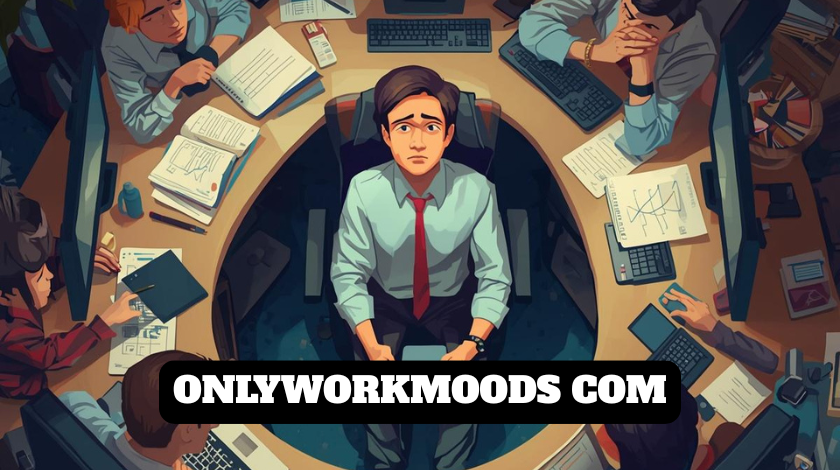
What Is OnlyWorkMoods Com? Your Complete Guide to Workplace Productivity and Mood Management
I still remember the Tuesday morning when I stared at my laptop screen for forty-five minutes without typing a single Word. My coffee had gone cold, my inbox had 50 unread emails, and I felt a heavy fog settling over my brain, making even simple tasks feel impossible. I had heard a colleague mention something about a website called onlyworkmoods.com during a Zoom call the previous week. In that moment of complete mental paralysis, I decided to search for it. That decision changed how I approach my work life entirely.
We have all experienced those days when getting through our to-do list feels like climbing a mountain in flip-flops. The modern workplace demands constant productivity, yet nobody teaches us how to manage the emotional and mental states that actually determine whether we can perform at our best. This is exactly where onlyworkmoods.com comes into play, offering something that most productivity resources completely miss: the understanding that our moods and emotional well-being are the foundation of effective work, not obstacles to it.
What is OnlyWorkMoods.com, Really?
When people first hear about onlyworkmoods.com, they often assume it is just another productivity blog filled with generic advice like waking up at 5 in the morning or drinking more green smoothies. I made that same assumption initially, which is why I was genuinely surprised when I actually explored the platform. Onlyworkmoods.com is a specialized digital resource focused on the intersection of workplace emotions, productivity patterns, and practical strategies for maintaining professional effectiveness without burning out.
The website operates as a content hub that publishes articles across several interconnected categories. Unlike many productivity websites that treat workers like machines that simply need better oiling, onlyworkmoods.com recognizes that human beings bring their full emotional selves to work every single day. The platform covers technology trends that shape how we work, travel insights for professionals who need to balance mobility with career demands, money management strategies to reduce financial stress, and workplace culture analysis to help readers understand the emotional undercurrents of their professional environments.
What makes onlyworkmoods.com particularly valuable is its recognition that work moods are not just about feeling happy or sad. Your work mood encompasses your motivation levels, your ability to focus, your creative energy, your patience with colleagues, and your capacity to handle stress when deadlines start piling up. The website approaches these topics with nuance, acknowledging that different professions, work arrangements, and personality types require different strategies for emotional management at work.
Why Work Moods Matter More Than You Think
I used to believe that professional success was primarily about skills, credentials, and hard work. While those elements certainly matter, I have come to realize that my mood on any given day has a more immediate impact on my output than almost any other factor. When I am in a positive, focused work mood, I can complete complex tasks in half the time it takes when I am feeling anxious, distracted, or emotionally drained. This observation is not just personal speculation; it aligns with extensive research on workplace psychology.
Studies consistently show that emotional states directly influence cognitive function, decision-making quality, and creative problem-solving abilities. When we are stressed or emotionally depleted, our brains literally function differently. The prefrontal cortex, which handles complex reasoning and impulse control, becomes less active, while the amygdala, which processes threats and emotions, becomes more dominant. This neurological shift explains why we make poorer decisions, have less patience with coworkers, and struggle to concentrate when we are in a bad mood at work.
The implications of this are enormous for both individual professionals and organizations. Companies lose billions of dollars annually due to decreased productivity caused by employee stress, burnout, and poor emotional management. On an individual level, failing to understand and manage your work moods can mean the difference between career advancement and stagnation, between feeling fulfilled by your work and dreading every Monday morning.
What I appreciate about resources like onlyworkmoods com is that they validate the emotional experience of working without suggesting that we need to become emotionless robots. The platform acknowledges that frustration, anxiety, and even occasional boredom are normal parts of professional life, while providing concrete tools to move through these states rather than get stuck in them. This balanced approach feels much more realistic and applicable than the toxic positivity that pervades much workplace advice.
Exploring the Content Categories on OnlyWorkMoods
One of the first things you will notice when visiting onlyworkmoods.com is the well-organized structure of the content categories. The website does not just throw random articles at you; it has clearly defined sections that address different aspects of the work experience. Understanding these categories helps you navigate directly to the content most relevant to your current needs.
The technology section deserves special attention because it recognizes a crucial point: our digital tools significantly affect our emotional states at work. Poorly designed software, constant notification interruptions, and confusing user interfaces create micro-frustrations that accumulate throughout the day, gradually degrading our mood and productivity. The technology articles on onlyworkmoods.com review tools and applications, specifically through the lens of how they affect user experience and emotional well-being, not just their feature lists.
The money and finance category addresses what might be the single biggest source of workplace stress for most people: financial insecurity. When you are worried about paying rent, saving for retirement, or managing unexpected expenses, maintaining a positive work mood becomes nearly impossible. This section provides practical financial advice tailored to different income levels and career stages, recognizing that financial stability is a prerequisite for emotional stability at work.
The travel section might seem like an odd fit for a workplace mood website until you consider how many modern professionals struggle with work-life balance, remote work arrangements, and the unique stresses of business travel. These articles explore how to maintain productivity and positive moods while traveling for work, how to negotiate remote work arrangements that actually support your mental health, and how to use travel as a genuine reset rather than just another source of stress.
The workplace culture section examines the emotional environment of offices, both physical and virtual. These articles help readers identify toxic workplace patterns, navigate difficult interpersonal dynamics with colleagues and managers, and contribute to creating more emotionally healthy work environments. This content is particularly valuable because workplace culture is often invisible to those immersed in it; we accept unhealthy dynamics as normal until someone points out alternatives.
How to Actually Use OnlyWorkMoods for Real Results
Finding a good resource is only the first step; knowing how to use it effectively determines whether you get any value from it. After spending considerable time with onlyworkmoods.com, I have developed a personal system for integrating its content into my work routine that has genuinely improved my professional life.
I start my week with a mood check-in on Sunday evening. Instead of just dreading Monday, I browse the latest articles on onlyworkmoods.com, looking specifically for content related to whatever I know I will be facing that week. If I have a difficult presentation coming up, I search for articles about managing presentation anxiety. If I am starting a new project, I look for pieces about initiating work with clarity and focus. This proactive approach means I am addressing potential mood challenges before they derail my productivity.
During the workweek, I use the website as a reset tool rather than a distraction. When I notice my focus fading or my frustration rising, I take a ten-minute break to read a relevant article, rather than scrolling through social media or checking news headlines, which usually just increases my anxiety. The articles on onlyworkmoods.com are substantial enough to provide genuine value in short reading sessions, and I often find that stepping away from my immediate stress to gain some perspective helps me return to work with better emotional regulation.
I also use the website’s content as conversation starters with colleagues. Workplace culture changes when people start talking openly about their emotional experiences at work, and sharing an interesting article on mood management or productivity can open the door to deeper conversations about how your team actually functions. I have had several meaningful discussions with coworkers that started with “I read this piece on onlyworkmoods.com about…” and led to real improvements in how we collaborate.
For long-term professional development, I treat the website as an ongoing education resource. I save articles that resonate with me and revisit them quarterly to see how my understanding has evolved. Some pieces that seemed irrelevant six months ago become incredibly pertinent as my career situation changes. This longitudinal approach to using the content means I am building a personal library of workplace wisdom rather than just consuming disposable internet content.
Real Talk: What Users Actually Experience
I want to be completely honest about something: not every article on onlyworkmoods.com will change your life. Some pieces are more useful than others, and depending on your specific industry and work situation, certain content will feel more applicable than the rest. This is true of any content platform, and I think it is important to set realistic expectations.
That said, the consistent feedback I hear from other users of onlyworkmoods.com, and what I have experienced myself, is that the platform provides a rare combination of practical advice and emotional validation. Many productivity resources make you feel inadequate for struggling with motivation or focus, implying that successful people do not have these problems. The tone of onlyworkmoods.com is different; it acknowledges that work is emotionally complex and that struggling with your moods does not make you a bad professional.
A marketing manager I know used the website’s content about managing remote work isolation to completely restructure her work-from-home routine, resulting in both better productivity and improved mental health. A software developer friend credits the platform’s articles on workplace communication for helping him navigate a particularly difficult team dynamic that was prompting him to consider leaving his job. These are not miracle transformations, but they represent meaningful improvements in real people’s professional lives.
The community aspect of onlyworkmoods.com, while not as prominent as on some platforms, still offers readers opportunities to engage with content and share their own experiences. Reading comments from other professionals dealing with similar challenges creates a sense of solidarity that is genuinely therapeutic. Work can feel isolating, especially in remote or hybrid arrangements, and knowing that others are grappling with the same mood management issues helps reduce the shame and self-blame that often accompany workplace struggles.
How OnlyWorkMoods Compares to Other Resources
I read a lot of productivity and career advice content, probably more than is healthy, so I feel qualified to compare onlyworkmoods.com with other popular resources in this space. The comparison is generally favorable, though each platform has its own strengths.
Compared to massive sites like Lifehack or Inc., onlyworkmoods.com offers more focused, less overwhelming content. The big platforms publish dozens of articles daily, making it difficult to find genuinely useful pieces amid the noise. Onlyworkmoods.com takes a more curated approach, meaning fewer total articles but generally higher relevance and quality per piece. If you want breadth, go to the big sites; if you want depth on workplace mood specifically, onlyworkmoods.com is the better choice.
Against specialized productivity apps and tools, the website holds its own by addressing the human element that technology often misses. You can have the best task management software in the world, but if you are emotionally depleted, it won’t save you. Onlyworkmoods.com complements technical tools by addressing the mood and motivation prerequisites for any system to actually work.
Compared to mental health resources that touch on workplace issues, onlyworkmoods.com maintains a professional focus that many therapy-oriented sites lack. The content acknowledges work realities like deadlines, difficult bosses, and career ambitions without reducing everything to individual pathology. This contextual understanding makes the advice more applicable to actual work situations rather than idealized versions of what work should be.
Expert Strategies for Better Work Moods Starting Today
While onlyworkmoods.com provides excellent content for ongoing learning, I want to share some immediate strategies you can implement right now to improve your work moods, drawn from my experience applying the platform’s principles. These are not theoretical concepts; they are practical interventions that have worked for me and others.
First, start tracking your mood patterns without judgment. For two weeks, simply note your emotional state at the beginning, middle, and end of each workday, along with what you were working on and any environmental factors like sleep quality or interpersonal conflicts. This data will reveal patterns you cannot see when you are just living through them. You might discover that your mood consistently crashes after video meetings, or that you feel most energized when working on creative tasks first thing in the morning. This self-knowledge is the foundation of all mood management.
Second, create transition rituals that help you shift between different emotional states. The ability to move from a frustrating meeting to focused individual work, or from relaxed home mode to professional engagement, is a skill that can be developed. I use a specific playlist for transition periods, a particular tea that I drink only when starting work, and a brief breathing exercise before checking email. These rituals signal to my brain that it is time to shift gears, making the transition smoother and less emotionally jarring.
Third, practice strategic disengagement. This may sound counterintuitive, but one of the best ways to maintain a positive work mood is to know when to step away completely. The articles on onlyworkmoods.com consistently emphasize that pushing through emotional depletion usually backfires, creating more problems than it solves. Learning to recognize when you need a genuine break and allowing yourself to take it prevents the mood crashes that come from unsustainable overextension.
Fourth, curate your information environment aggressively. The content you consume during work hours, including what you read on breaks, significantly impacts your mood. I have stopped checking general news during the workday because it consistently spikes my anxiety without providing anything actionable. Instead, I use resources like onlyworkmoods.com that provide relevant, constructive content that actually helps me think about my work differently, rather than just making me worry about things I cannot control.
Where Workplace Mood Management Is Heading
Looking at the trajectory of content on onlyworkmoods.com and similar platforms, I see several trends that suggest where workplace mood management is heading in the coming years. Understanding these trends helps you prepare for the evolving nature of work and emotional health.
Artificial intelligence is increasingly being applied to mood detection and management in workplace tools. While this raises legitimate privacy concerns, it also offers the possibility of real-time emotional support that was previously impossible. Imagine software that notices when your typing patterns suggest increasing frustration and automatically suggests a break, or meeting platforms that help facilitators recognize when participants are emotionally disengaging. These technologies are emerging now and will likely become standard within a few years.
The normalization of discussing mental health at work continues to progress, though unevenly across industries and cultures. Resources like onlyworkmoods.com are part of this normalization, treating workplace mood as a legitimate topic for professional discussion rather than a personal weakness to hide. This cultural shift means that mood management strategies will increasingly be built into professional development programs rather than left to individuals to figure out on their own.
Remote and hybrid work arrangements are forcing new conversations about emotional connection and workplace community. The traditional office provided mood regulation through social contact, even when that contact was not explicitly about emotions. As work becomes more distributed, we need new strategies for maintaining the emotional benefits of community without physical proximity. The content exploring these dynamics on onlyworkmoods.com represents early thinking in what will become a major area of workplace innovation.
Finally, there is growing recognition that individual mood management, while important, cannot compensate for toxic organizational cultures or unsustainable workloads. The most advanced thinking in this space, some of which appears on onlyworkmoods.com, recognizes that systemic change is necessary alongside individual skill development. This balanced perspective prevents the victim-blaming that often characterizes productivity advice, acknowledging that sometimes the problem really is the workplace, not the worker.
Conclusion
Onlyworkmoods.com represents a valuable evolution in how we think about professional productivity and success. By placing workplace mood management at the center of career development rather than treating it as an afterthought, the platform offers something genuinely different from generic productivity advice. Whether you are struggling with motivation, navigating difficult workplace relationships, or simply trying to maintain your sanity while building your career, the content on this website provides practical, emotionally intelligent guidance.
My own journey with onlyworkmoods.com has taught me that sustainable professional success requires attending to my emotional experience of work, not just my output metrics. The strategies I have learned from the platform have not eliminated difficult workdays. Still, they have helped me recover from them more quickly and maintain better overall well-being while pursuing ambitious career goals. In a professional landscape that often demands we sacrifice our health for success, resources that help us integrate emotional well-being with career achievement are not just nice to have; they are essential.
Frequently Asked Questions
What exactly is onlyworkmoods.com, and what does it offer?
Onlyworkmoods.com is a digital content platform focused on workplace productivity, emotional well-being, and professional development. The website publishes articles across categories, including technology, finance, travel, and workplace culture, all approached through the lens of how they affect worker moods and emotional states. Unlike generic productivity sites, it specifically addresses the intersection of work performance and emotional health.
Is the content on onlyworkmoods.com free to access?
Yes, the articles and resources on onlyworkmoods.com are freely accessible. The platform operates as a content publication site where readers can browse and read articles without subscription fees or paywalls. This accessibility makes it a practical resource for professionals at any career stage who want to improve their workplace emotional management without financial investment.
Who writes the content for onlyworkmoods.com?
The website features multiple contributors with expertise in various professional domains. Authors include career coaches, technology analysts, financial advisors, and workplace culture specialists, each bringing diverse perspectives to the content. This multi-author approach ensures coverage of different industries and professional situations rather than a single viewpoint.
How often is new content published on onlyworkmoods.com?
New articles are published regularly, though the exact frequency varies. The platform maintains active categories across its main topics, with fresh content appearing weekly. Readers can check specific category sections or the main page to find the latest articles relevant to their interests and current workplace challenges.
Can only working moods really help improve my work performance?
While individual results vary, the platform provides evidence-based strategies for managing the emotional and psychological aspects of work that directly impact performance. By addressing mood management, stress reduction, and workplace culture navigation, the content can contribute to improved focus, better decision-making, and more sustainable career progress. However, like any resource, the benefits depend on actually applying the strategies rather than just reading about them.