The Palatine Uvula: Why That Little Dangly Thing in Your Throat Actually Matters More Than You Think
I remember being about seven years old, standing in front of the bathroom mirror with a flashlight, mouth wide open, staring at this weird teardrop-shaped thing hanging down at the back of my throat. I was convinced I had some kind of alien growth back there. I ran to my mom in a panic, pointing at my mouth and trying to explain that something was seriously wrong with me. She laughed, patted my head, and told me it was just my uvula and that everyone had one. I did not find this comforting. How could something so strange-looking be normal?
Fast forward a couple of decades, and here I am writing about that very same fleshy little pendulum. If you have ever searched for “palmon’s uvula” online, you might have been confused by the results. That is because the correct term is actually the palatine uvula, though you will occasionally see variations like “palmon’s uvula” in some health articles and regional terminology
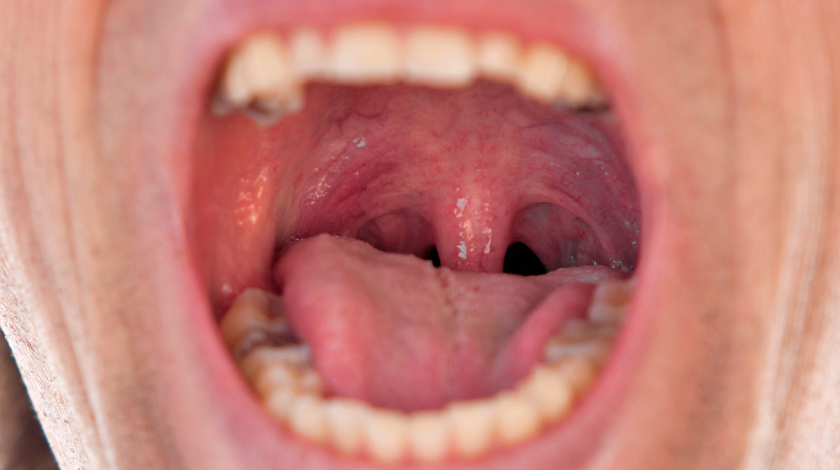
. It is that conical, fleshy projection hanging from the middle of your soft palate. Despite its small size, it is actually one of the most interesting parts of human anatomy.
What Exactly Is the Palatine Uvula?
Let us get the basics out of the way. Your uvula, technically called the palatine uvula, is located at the very back of the roof of your mouth. It is part of your soft palate, which is the muscular, flexible section at the back of your mouth, different from the hard, bony palate at the front
. When you look in the mirror and say “ahhh,” that little punching bag-looking thing bouncing around is your uvula.
Anatomically speaking, the uvula is composed of several types of tissue. It contains connective tissue, muscle fibres specifically from the musculus uvulae, and numerous glands that produce saliva
. The muscle fibres allow it to move and change shape, while the glands keep it, well, slimy. This is important because that slime, gross as it might sound, serves a real purpose.
The uvula is typically pinkish, though it can appear redder when irritated or inflamed. It usually measures about 1 to 1.5 centimetres in length, though this varies from person to person. Some people have naturally longer uvulas, while others may have a bifid uvula, which appears split at the end. About 2 per cent of the population has a bifid uvula, which is the most common form of clefting in the mouth and nose.
Here is something that blew my mind when I first learned it: only humans have a uvula. No other animal has this specific structure. Not your dog, not your cat, not even primates like chimpanzees. Researchers found that among eight different mammals studied, only two baboons showed a small, underdeveloped uvula-like structure, but nothing like the sophisticated organ humans possess
. This makes the uvula a uniquely human feature, raising fascinating questions about evolution and function that we will explore later.
Where Did the Name “Palmon’s Uvula” Come From?
You might be wondering why some people refer to it as “palmon’s uvula” when the medical community uses “palatine uvula.” The truth is, “palmon’s uvula” appears to be a colloquial variation or possibly a misremembering of the anatomical term. The Word “palatine” refers to the palate, which is the roof of the mouth. The term “uvula” comes from the Latin Word “uva,” meaning “grape,” because ancient anatomists apparently thought it looked like a small grape hanging down.
In my research, I found a health magazine reference to “palmar uvula”
, but this seems to be an outlier. The standard medical terminology remains “palatine uvula” across dental, ENT, and anatomical literature
. However, language evolves, and people search for information using the terms they know. If you have been calling it “palmon’s uvula,” you are not wrong exactly; you are just using a less common variant. The important thing is understanding what this structure does and why it matters for your health.
The Real Functions: It Is Not Just Decoration
For centuries, scientists were genuinely puzzled by the uvula. Some thought it was a useless leftover from evolution, a vestigial organ like the appendix. Others proposed wild theories, like that it caused chronic cough or was responsible for sudden infant death syndrome
. Nineteenth-century doctors were so confused that they would sometimes clip the uvula as a treatment for various ailments, which sounds absolutely terrifying.
Modern research has revealed that the uvula is far from useless. In fact, it performs several crucial functions that you probably never think about until something goes wrong.
Saliva Production and Throat Lubrication
One of the primary functions of the uvula is to produce saliva. The glands within the uvula secrete large amounts of thin, watery saliva that keeps your throat moist and lubricated
. This is especially important during speech. Have you ever noticed how hard it is to talk when your mouth is dry? The uvula helps prevent that by providing a constant supply of moisture to the back of your throat. This saliva also helps wash away bacteria and keeps the tissues healthy.
Preventing Nasal Regurgitation
Perhaps the most practical function of the uvula happens when you eat or drink. When you swallow, your soft palate and uvula move upward and backwards to close off the nasopharynx, which is the opening between your throat and your nasal cavity
. This prevents food and liquid from going up into your nose. If you have ever laughed while drinking and had liquid come out of your nose, you have experienced what happens when this mechanism fails. Without your uvula working properly, every meal could end with food in your nasal passages, which is as unpleasant as it sounds.
Speech and Sound Production
The uvula plays a significant role in speech, particularly in certain languages. While English speakers do not use their uvula much in speech, many other languages rely heavily on it. French, German, Hebrew, Arabic, and several African languages use what are called uvular consonants, sounds produced by constricting airflow between the uvula and the back of the tongue
. The voiced uvular trill, written as [ʀ] in phonetic notation, is a perfect example. If you have ever tried to speak French and struggled with those throaty “r” sounds, you were essentially trying to use your uvula correctly.
Even in English, the uvula helps close off the nasal passage during certain sounds, preventing air from escaping through your nose when it should be coming out of your mouth. This coordination between your uvula, soft palate, and tongue is essential for clear speech.
The Gag Reflex
Your uvula is also involved in your gag reflex, that automatic response that prevents choking. When something touches your uvula or the back of your throat, it triggers a contraction that helps expel the object
. This is a protective mechanism that keeps you from swallowing things that are too large or could block your airway. It is also why doctors use tongue depressors carefully during exams; nobody wants to trigger that reflex unnecessarily.
When Things Go Wrong: Common Uvula Problems
Despite being a helpful little organ, the uvula can cause problems when it becomes irritated, infected, or abnormally shaped. Here are the most common issues people experience.
Uvulitis (Swollen Uvula)
If you have ever woken up with a sore throat and looked in the mirror to see your uvula enlarged and red, you have experienced uvulitis. This inflammation can make your uvula swell to three to five times its normal size, sometimes touching your tongue or the back of your throat
. When this happens, you might feel like you are choking or gagging constantly, even though nothing is actually stuck there.
Uvulitis has several causes. Dehydration is a big one, especially if you sleep with your mouth open or live in a dry climate. Infections like strep throat or the flu can cause swelling. Allergic reactions, smoking, excessive alcohol consumption, or even just snoring heavily can irritate the uvula
. I once got uvulitis after a particularly bad cold, and let me tell you, feeling like you are gagging every time you swallow is not fun.
Treatment usually involves addressing the underlying cause. If it is dehydration, drink plenty of water. If it is bacterial, antibiotics might help. For allergic reactions, antihistamines can reduce swelling. Home remedies like gargling with salt water, using throat lozenges, and staying away from smoke can provide relief
. Most cases resolve within a day or two, but if the swelling lasts longer than 8 to 12 hours or is accompanied by fever and severe pain, see a doctor.
Bifid Uvula
As mentioned earlier, about 2 per cent of people are born with a bifid uvula, where the tip is split into two parts
. This happens when the palatine shelves do not fuse completely during embryonic development. Although it may look unusual, a bifid uvula is usually harmless. However, it can sometimes be associated with a condition called velopharyngeal insufficiency (VPI), where the soft palate does not close properly against the back of the throat during swallowing.
People with VPI might experience nasal regurgitation, where food or liquid comes out of their nose when they swallow, or speech problems where they cannot pronounce certain sounds correctly. In some cases, a bifid uvula can also be a sign of genetic conditions like Loeys-Dietz syndrome, which affects connective tissue
. If you have a bifid uvula and experience swallowing or speech difficulties, an ENT specialist can evaluate whether treatment is needed.
Elongated Uvula
Some people naturally have longer uvulas than others. While this is usually just a normal variation, an elongated uvula can contribute to snoring and sleep apnea. When you sleep, your muscles relax, and a long uvula can vibrate against the back of your throat or even flap over your airway, causing obstruction
. If your partner complains about your snoring and you have a visibly long uvula, there might be a connection.
The Snoring Connection: How Your Uvula Keeps Your Partner Awake
Speaking of sleep, let us talk about one of the most common complaints related to the uvula: snoring. About 45 per cent of adults snore occasionally, and 25 per cent snore regularly
. While snoring can have many causes, the uvula is often a major contributor.
When you fall asleep, your muscles relax, including those in your throat and soft palate. Your uvula, which is normally held somewhat taut during the day, becomes floppy. If you have a large or long uvula, it can vibrate as air passes over it during breathing, creating that characteristic snoring sound. In more severe cases, the uvula can actually block your airway entirely, causing obstructive sleep apnea (OSA)
Sleep apnea is serious business. It is linked to high blood pressure, heart disease, diabetes, and daytime fatigue that can be dangerous if you are driving or operating machinery. Symptoms include loud snoring, gasping for air during sleep, morning headaches, and excessive daytime sleepiness
. If you suspect you have sleep apnea, get evaluated by a sleep specialist. They might recommend a sleep study to monitor your breathing patterns.
Surgery: When Removal Becomes Necessary
For people with severe snoring or sleep apnea caused by uvula problems, surgery might be an option. The most common procedure is called uvulopalatopharyngoplasty, or UPPP, which is quite a mouthful. This surgery removes excess tissue from the uvula and soft palate to widen the airway
. Sometimes just the uvula is removed in a procedure called a uvulectomy.
I have to be honest, the idea of having my uvula removed sounds terrifying. But for people who have struggled with years of poor sleep and relationship strain from snoring, it can be life-changing. The surgery is usually done under local anaesthesia in a doctor’s office and takes about 5 to 10 minutes for a simple uvulectomy
. Recovery involves dealing with a sore throat for a couple of weeks, drinking plenty of fluids, and eating soft foods.
However, uvula removal is not without risks. You might experience changes in your voice, trouble swallowing, or a persistently dry throat because you no longer have those saliva-producing glands
. Some people report feeling like something is missing, which makes sense because, well, something is. Surgery should always be a last resort after trying other treatments like CPAP machines, weight loss, or positional therapy.
The Evolutionary Angle: Why Only Humans Have This
Remember how I mentioned that only humans have a uvula? This fact has led researchers to some fascinating theories about human evolution. A study published in Otolaryngology-Head and Neck Surgery compared human uvulas with those of other mammals and found that the human uvula is unique in its complexity and glandular composition.
The researchers proposed that the uvula might be an accessory organ of speech, evolving as human language became more complex. The ability to produce a wide range of sounds used in human language, including the guttural and uvular consonants mentioned earlier, might have given our ancestors an evolutionary advantage. The study concluded that “the uvula is possibly an accessory organ of speech, and may be another marker of human evolution that differentiates man from other mammals”
This makes the uvula not just a physical feature but a potential marker of what makes us human: our ability to communicate complex ideas through spoken language. Next time you look at your uvula in the mirror, remember that you are looking at something that helped make human civilisation possible.
Caring for Your Uvula: Practical Tips
So how do you keep this important little organ healthy? Here are some practical tips based on medical advice and common sense.
Stay Hydrated
Since dehydration is a major cause of uvula irritation, drinking plenty of water throughout the day is essential. This is especially important if you live in a dry climate, sleep with your mouth open, or take medications that cause dry mouth. Keep a water bottle handy and sip regularly.
Avoid Irritants
Smoking is terrible for your entire mouth and throat, including your uvula. The heat and chemicals can cause chronic irritation and swelling. Excessive alcohol consumption can also dehydrate you and irritate the tissues. If you snore, try sleeping on your side instead of your back, as back-sleeping allows gravity to pull your uvula backwards into your airway.
Practice Good Oral Hygiene
Since your uvula is part of your oral cavity, keeping your mouth clean helps prevent infections that can spread to the uvula. Brush your teeth twice daily, floss regularly, and consider using an antiseptic mouthwash if you are prone to throat infections.
Know When to See a Doctor
If your uvula is swollen for more than a day or two, if you have trouble breathing or swallowing, or if you notice unusual lumps or white spots, see a healthcare provider. These could be signs of infection, allergic reaction, or other conditions that need treatment.
Conclusion
That little dangly thing in the back of your throat, whether you call it the palatine uvula or have heard it referred to as “palmon’s uvula,” is far more important than its strange appearance suggests. From keeping your throat moist and helping you swallow without shooting food out your nose to enabling the complex sounds of human speech, the uvula proves that size does not determine significance.
I have come a long way from that seven-year-old kid who thought he had an alien growth in his throat. Understanding how our bodies work, even the weird-looking parts, helps us appreciate the complexity of human biology and take better care of ourselves. Your uvula works hard every day, mostly without you even noticing. Maybe it is time we gave it a little appreciation, or at least stopped making fun of how it looks.
If you take anything away from this article, let it be this: do not ignore problems with your uvula. Persistent swelling, chronic snoring, or difficulty swallowing are not just annoyances; they are signals that something needs attention. Take care of your uvula, and it will take care of you, one swallow, one Word, and one night of peaceful sleep at a time.
Frequently Asked Questions
What is the difference between “palmon’s uvula” and the palatine uvula? “Palmon’s uvula” appears to be a colloquial variation or misspelling of “palatine uvula,” which is the correct anatomical term for the fleshy projection hanging from your soft palate. Both refer to the same structure.
Can you live without a uvula? Yes, you can live without a uvula. Some people have it removed surgically to treat severe snoring or sleep apnea. However, removal can lead to a persistently dry throat and minor speech changes because you lose the saliva-producing glands housed in the uvula.
Why is my uvula swollen when I wake up? Morning uvula swelling is often caused by dehydration, especially if you sleep with your mouth open, snore, or use CPAP machines without humidification. It can also result from infections, allergies, or acid reflux.
Does a bifid uvula mean I have a cleft palate? Not necessarily. While a bifid uvula can be associated with a submucous cleft palate, many people with a split uvula have completely normal palates. However, if you experience nasal regurgitation or speech issues, consult an ENT specialist.
Why do only humans have uvulas? Research suggests the uvula evolved as an accessory organ of speech, helping humans produce the complex sounds necessary for language. Its unique glandular composition and structure are not found in other mammals, making it a marker of human evolution.